
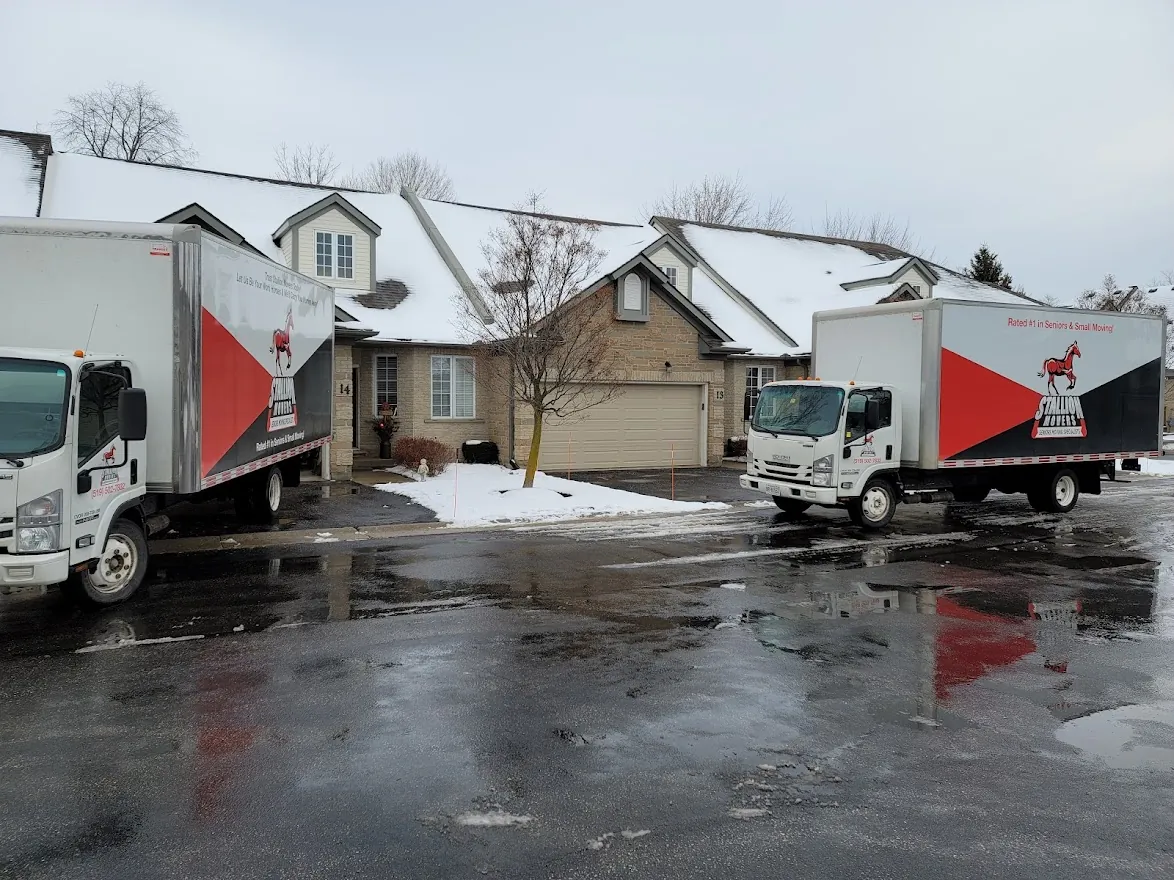
For a winter move in Waterloo Region, the essentials are clear, salted paths at both homes, a plan to protect floors from snow and slush, keeping cold-sensitive items like electronics, plants and liquids out of the truck where you can, and agreeing with your mover how a storm day would be handled. Winter moves are routine — they just reward a little extra preparation.
Winter can also be a good time to move. Outside the holiday weeks, dates are often easier to find than in summer. Here is how to get ready.
Snow and Ice Are the Main Job
Ice on a front walk is the biggest winter hazard for a crew carrying furniture. Clear and salt every route the movers will use, at both ends, the evening before and again in the morning.
- Driveway, walkway, steps and porch
- The spot where the truck will park, including the curb and any windrow from the plough
- Side or back doors if they will be used
- At the new home: ask the seller, landlord or property manager to clear it, or arrange it yourself
- Keep a bag of salt or sand and a shovel by the door for the day
Protecting Floors
Every trip in and out brings snow and grit. A professional crew lays floor runners and protection, but it helps to put down extra mats at entrances, have old towels ready, and clear the mudroom so there is space to work. Tell your mover about floors you are especially concerned about.
Items That Do Not Like the Cold
A moving truck is not heated. For a short local move most belongings are fine, but some things are worth extra thought.
- Plants: move them in a warm car, wrapped, and as briefly as possible
- Laptops and tablets: carry them yourself; let cold electronics warm to room temperature before switching on
- Liquids that can freeze — and anything that could crack if they do
- Instruments and fine wood furniture: ask your mover how they will be wrapped
- Candles and items that can warp
Heat, Hydro and the New Home
Arrange for the heat to be on at the new home before you arrive, and confirm the utilities transfer date. At the old home, doors will be open for hours — turn the thermostat down during loading and back up when you leave if the home is not being handed over that day. If the property will sit empty, ask your insurer or the new owner what is expected.
Daylight and Timing
Winter days are short. An earlier start means more of the move happens in daylight, which is safer on stairs and walks. Turn on exterior lights at both homes and make sure entrance lighting works before the day.
If a Storm Hits
Waterloo Region gets real winter weather, and sometimes a storm lands on moving day. Safety comes first — for your crew, your belongings and you. Talk to your mover at booking about how weather is handled and how you will be contacted. Watch the forecast in the days before, and if your dates have any flexibility, keep a back-up day in mind.
Keep in touch with your lawyer, landlord or building about timing too; a delayed truck is much easier to manage when everyone knows early.
Booking a Winter Move
Outside the holiday period and month-end, winter dates are usually easier to get than summer ones. The usual advice still applies: book early for the last days of the month, and start the quote as soon as you know you are moving.
Whether you are moving across Kitchener or between Waterloo Region cities, the same preparation applies at both ends.
We move families through every season, and our crews are used to winter conditions. Tell us about access at both homes when you book and we will plan around the weather with you.