
MOVING TIPS
Moving Tips
These are the things we would tell a friend who asked how to make a move go well. They are organised by when they matter, because most of what decides a moving day happens in the weeks before it. Some of them will cost us a booking on a busy date, and we would rather say them anyway.
Each phase points to a longer guide if you want the detail. If you are organising a move for a parent, start with the senior guides listed at the bottom of the page — the sequence is the same, but the timeline is longer and the decisions are harder.
Six to Eight Weeks Before: Dates, Quotes and Decisions
Demand is not evenly spread. The end of the month, Fridays, Saturdays and long weekends fill first, and in Waterloo Region the end of April and the end of August are crowded by student lease turnover. A mid-week, mid-month date is easier to book and usually a calmer day, because elevators, loading zones and roads are under less pressure too. Our guide on how far ahead to book movers covers the booking windows month by month.
Get your quote early and make it accurate. A formal quote needs enough information — photos, a short video walkthrough, or a virtual or in-home assessment for larger, senior or more complex moves. Tell us about stairs, elevators, parking, long carries, extra stops, storage, donation or disposal, appliances, packing and any specialty or high-value items. Anything left out can change the crew, the truck, the time and the final bill. You do not need to pack before an estimate; we would rather see the home as it is.
- Pick two or three possible dates rather than one, and ask which gives the better day
- Film the walkthrough in daylight, opening closets, the garage, the basement and any storage locker
- Decide what is not coming — selling, donating, giving to family — before anything is packed
- Check your possession and move-in times; a possession time is not the same as a move-in time
- Ask the building at both ends about elevator bookings, permitted move hours and where a truck can stand
- Read what basic valuation coverage means: $0.60 per pound per damaged article, unless you arrange more
Three to Four Weeks Before: Packing That Saves Hours
Being genuinely finished packing is worth more than every other tip on this page put together. Unfinished packing is the most common reason a moving day runs long, and it is the one variable entirely within your control. Start with the rooms you use least — spare rooms, the basement, books, seasonal clothing — and leave the kitchen essentials until the last few days.
- Use small boxes for books and heavy items, larger boxes for light things like linens
- Fill boxes to the top so they stack without crushing; half-empty boxes collapse
- Label every box on the side, not the top, with its destination room
- Stand plates on edge, wrapped, rather than lying them flat
- Put screws and fittings in a labelled bag taped to the furniture they belong to
- Set aside anything we cannot carry: paint, fuel, propane, chemicals, ammunition and perishables
- Move cash, jewellery, passports, important papers and medication yourself, never on the truck
The Week of the Move
The last week is about access and logistics rather than boxes. Most of the time lost on a moving day is lost at the door — waiting for an elevator, carrying from a distant parking spot, or clearing a route that was full of things.
- Confirm the elevator booking and ask for the earliest, longest window available
- Arrange parking at both ends — reserve a loading zone or keep the driveway clear
- Defrost and dry the freezer at least a day ahead
- Take down curtains, blinds, mirrors and anything screwed to the wall, or tell us in advance
- Photograph the cabling behind the television and computer before you unplug it
- Pack an essentials bag: medication, ID, keys, chargers, documents and a change of clothes
- Pack a first-night box: kettle, mugs, toilet paper, bedding, towels and basic tools
- Arrange care for pets and young children for the day; they travel with you, never in the truck
Moving Day
Be present, be decisive, and stay out of the loading route. The most valuable thing you can do on the day is answer questions quickly — where does this go, is this coming, which of these two did you mean. The clock starts when the crew arrives, so a home that is ready on arrival is a shorter, cheaper day.
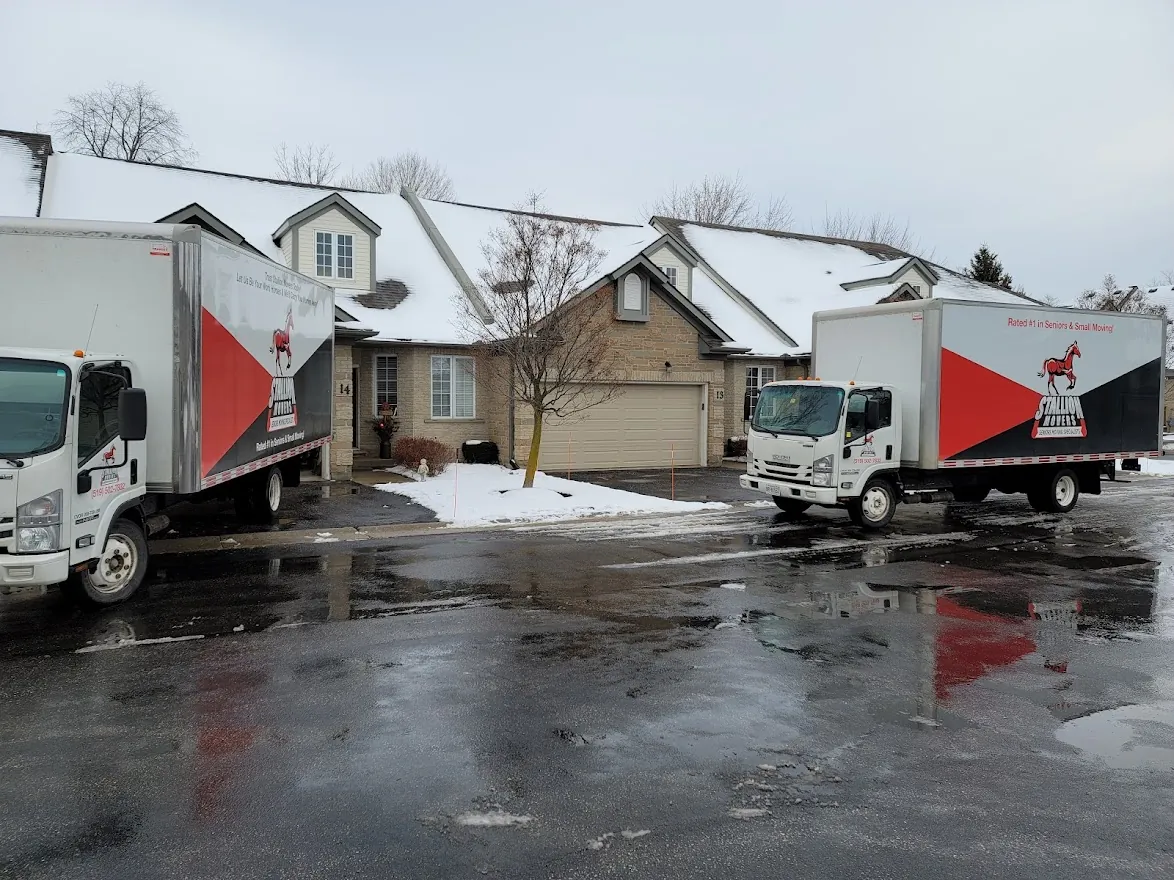
In winter, prepare the ground rather than the furniture. Shovel and salt the walk and the driveway at both ends, keep the heat on in both homes, and expect more driving time on rural and county roads. A sloped, icy driveway sometimes means loading from the street. Electronics, plants and liquids should not sit for long in a cold truck.
- Walk the crew through the home before anything moves, pointing out what is staying
- Keep hallways, stairs and the path to the truck clear of boxes and people
- Decide in advance where the large pieces go in the new home, and tape a room plan to the door
- Do a final walk of every room, closet, cupboard, the garage, shed and loft before the truck leaves
- Check the Bill of Lading before you sign it; any change in scope belongs written there
After the Move
The move is not finished when the truck leaves. Unpack the bedroom and bathroom first so the first night is comfortable, then the kitchen. Book the day after the move off as well as the day itself — that is the day most people need.
- Update your address with Canada Post, CRA, ServiceOntario, your bank, insurer and utilities
- Check furniture and boxes within the first few days and report any damage in writing
- Break down boxes as you go so they do not fill the new home
- Test smoke and carbon monoxide alarms and find the water shut-off and electrical panel
- For a parent who has moved into a retirement suite, plan for the first week rather than the first day
Ready to Get This Moving?
Tell us what is moving and we will come back with a real plan and a real price — or call and talk it through with someone who does this every day.
Prefer to talk? Call us.
Questions Families Ask Us
Is it cheaper to move mid-week?
Often, yes, in practice. Busy dates, weekends and holidays can carry extra charges, and a mid-week or mid-month move is easier to schedule well and often a faster day because elevators, loading zones and traffic are under less pressure. On a move billed by time, that is real money. Your written quote sets out what applies to your date.
Is a winter move a bad idea?
Not at all. It is quieter, easier to book, and entirely manageable with shovelled, salted paths at both ends. The genuine hazard is grade plus ice, which occasionally means we load from the street rather than the driveway.
What is the single best thing I can do?
Finish packing. Nothing else comes close. Unfinished packing is the most common reason a moving day runs long, and it is the one variable entirely within your control.
Should I tip the crew?
It is never expected and always appreciated. There is no standard and nobody will think less of you for not doing it; a good review is worth as much to us.
Keep Reading
- How Far Ahead to Book MoversBooking windows for busy and quiet months.
- Preparing for a Virtual EstimateWhat to show and how to film it.
- Should You Pack Before an Estimate?Why we would rather see the home as it is.
- What to Move YourselfWhat belongs in your car, not on the truck.
- What Movers Cannot TransportThe items that stay off the truck, and why.
- Packing TipsBox sizes, kitchens, labelling and common mistakes.
- Room-by-Room Packing GuideEach room, in order.
- Elevator & Parking PrepBookings, loading zones and building rules.
- Preparing Your Home for MoversWhat to have done before the crew arrives.
- Moving Day Essentials BagWhat to keep with you on the day.
- Moving in Winter in Waterloo RegionSnow, ice and short days on moving day.
- Getting Ready for Moving DayHow readiness changes time and cost.
- Change-of-Address ChecklistEveryone who needs your new address.
- $0.60 per Pound Coverage, ExplainedWhat basic valuation coverage means.
- Making a Senior Move Less OverwhelmingFor families organising a parent's move.
- First Week in a Retirement SuiteSettling in after the move.
- Moving ChecklistsA printable plan from two months out.
- ResourcesEvery guide in one place.
Planning a Move?
Tell us your dates and we will tell you honestly which of them will give you the better day.
Prefer to talk? Call us.