
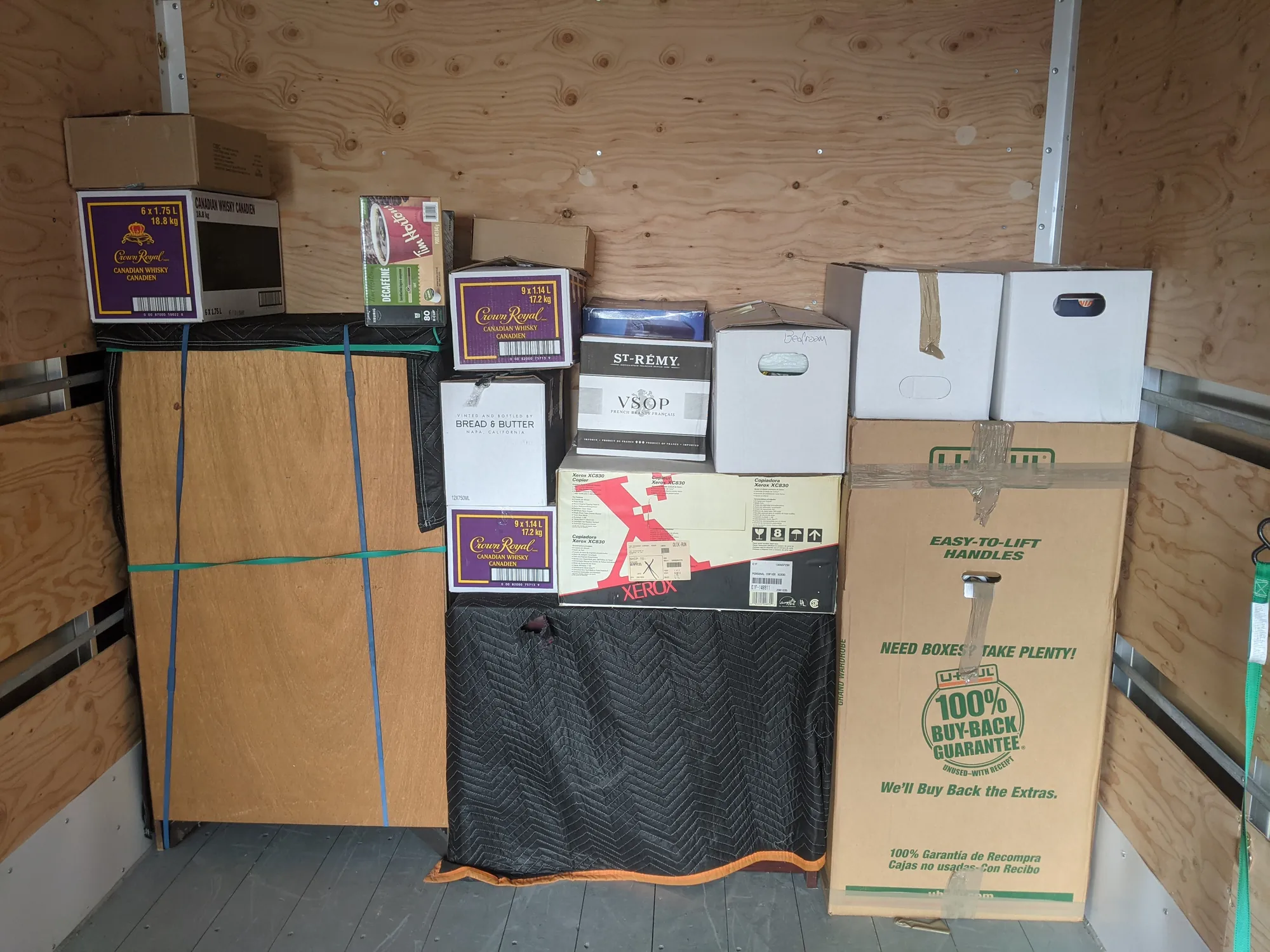
You do not need to pack before a moving estimate, and it usually helps not to. An estimate is built from what is in your home — furniture, closets, the basement, the garage — and boxes stacked in a corner hide how much there is inside them. Show your home as it is, tell the mover what is going and what is not, and start packing once the quote is in hand.
There are a few things worth doing before the estimate, though, and they make the quote more accurate. Here is what to do and what to leave.
Why Packing First Can Make the Quote Less Accurate
A mover estimating a move is trying to picture loading day: how many boxes, how much furniture, how long each room takes. Open closets and full shelves are easy to judge. A stack of sealed boxes is not — it could be thirty or sixty once everything is done.
Packing early also makes it easy to forget what is still to come. Kitchens, basements and garages almost always hold more than people expect, and those are often the rooms that get packed last.
Show Everything, Including the Hidden Rooms
Whether the estimate is in person or virtual, open every door. The crawlspace, the storage locker, the shed and the garage are part of the move if anything in them is going. These are the spaces most often left out of an estimate and found on the day.
- Basement, attic, crawlspace and under-stair storage
- Garage and shed, including tools and outdoor furniture
- Closets, including the ones that are full
- Condo or apartment storage lockers
- Anything already in a storage unit that is joining the move
What Is Worth Doing Before the Estimate
Decluttering before the estimate is the one form of preparation that really pays off. Every item you sell, donate or discard before the quote is one you do not pay to move.
- Decide what is not coming, and set it aside or point it out
- Make a short list of large or unusual items — piano, safe, gym equipment, artwork
- Note access details: stairs, elevator, parking, long walks to the door
- Know whether you want packing help, or plan to pack yourself
- If you are not sure about a piece, say so — it can be quoted either way
If You Have Already Started Packing
That is fine. Count the boxes, note roughly what size they are, and tell the estimator what is still to pack. Leave a sample of each kind of room — one bookshelf, one kitchen cupboard — unpacked if you can, so they can judge the rest.
Packing Yourself or Having It Done Affects the Quote
Whether you pack yourself or want packing services changes the plan: more time, possibly more crew, and packing supplies charged as used. If you are undecided, ask for both. Partial packing — the kitchen and the fragile items only — is common and often the best value.
How Stallion Builds a Quote
Our website shows starting prices by move size, so you can see roughly where you will land. A written quote is built from your actual details: an inventory or questionnaire, photos, a video walkthrough, or a virtual or in-home assessment. It sets out the minimum, the crew, the truck, the included time and the estimated range.
The more complete the picture, the more the quote holds. Items or conditions that were not shared can change the crew, truck, time and final bill — which is why we would always rather see a home before it is packed.
Get the quote, then pack. If you want a sense of the process before you start, our pricing page shows starting prices, and a virtual survey is usually the fastest way to a written quote.