
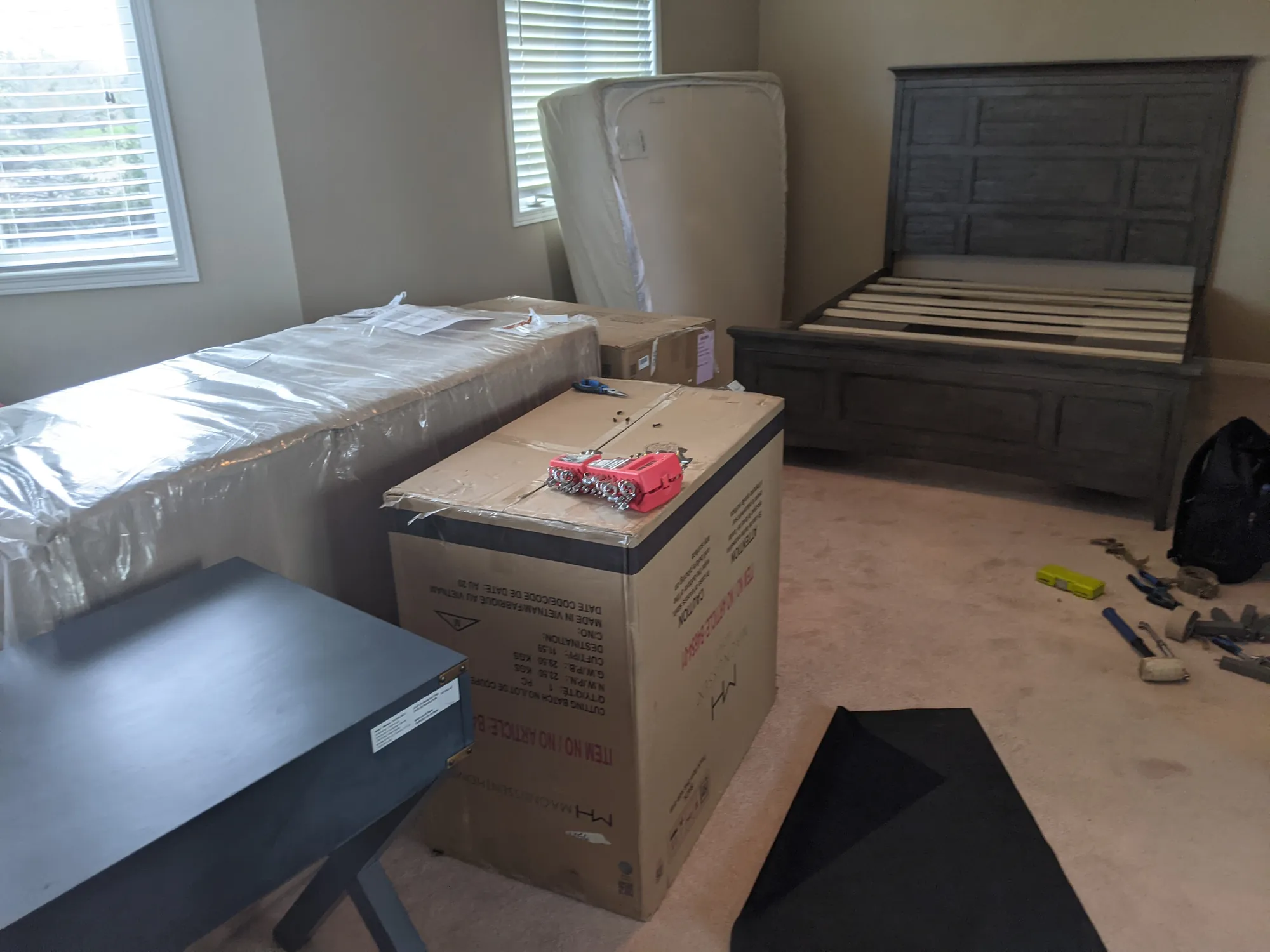
On the first day, set up the bed, the favourite chair, safe walking routes, working lights, the phone and the call system, and the bathroom essentials. Over the next few days add the television, the kitchen, the closet and the pictures. Leave the finishing touches for later in the week, when your parent has started to live in the room and knows what they want.
The first week shapes how a parent feels about the new home for a long time. A room that works and feels familiar on the first night makes everything after it easier.
Day One: Sleep and Safety
If the residence has a staff member who explains the emergency call system, ask for that on the first day, with family there.
- Bed assembled, positioned and made with their own bedding
- Bedside table with lamp, glasses, water and phone within reach
- Clear walking routes from bed to bathroom and from chair to door
- No loose rugs or cords across the floor
- Night light between the bed and the bathroom
- Call bell or emergency pendant tested and explained
Day One: The Familiar Chair
Put the chair where your parent will actually sit — usually by the window or facing the television — with a side table, a lamp and the remote. This is the spot that makes the room feel like theirs, and it should be ready before anyone leaves on moving day.
Day One: The Bathroom
Unpack toiletries, towels, a non-slip bath mat and anything they use morning and night. Check that grab bars and a shower chair, if needed, are in place. Medications go wherever the residence's process says they should.
Days Two and Three: Television, Phone and Connections
Get the television working with the remote they know, and write down simple instructions if the setup is new. Make sure their phone is charged and their key numbers are saved. If the residence has Wi-Fi, connect their devices and write down the network details.
Small frustrations with technology feel much larger in an unfamiliar place. A family member or helper patient enough to set it up properly is worth a great deal here.
Days Two to Four: Clothes and Kitchen
Unpack the closet with the clothes they wear most at eye level and within easy reach. Put seasonal or occasional clothes higher up or in storage. In the kitchenette, set out the kettle, mugs and the few things they use daily; resist filling every cupboard.
Ask your parent where things should go rather than arranging it for them. It is their kitchen now.
Later in the Week: Pictures and Personal Touches
Photographs, artwork, keepsakes, plants and the clock from the old hall. These matter a great deal and are best done together, once your parent has spent a few days in the room and has a sense of where they want to look.
Check the residence's rules on hanging things first; some prefer their own maintenance staff to do it.
Things to Watch for in the First Week
- Furniture that turns out to block a route — move it or take it out
- Lighting that is too dim at night
- A bed at the wrong height to get in and out easily
- Things they keep looking for — put them somewhere more obvious
- Boxes that never get opened — take them away rather than letting them sit
The Settling-In Itself
Practical setup only goes so far. Visits in the first week, introductions to neighbours or staff, joining a meal or activity, and familiar routines all matter. Some parents settle in within days; others take weeks. Both are normal.
If your parent seems more confused, withdrawn or unwell than the move alone would explain, talk to the residence's care staff or their doctor. That is not something a mover can help with, but it should not be ignored.
Bed, chair, safe routes, lights, phone and bathroom on day one. Television, closet and kitchen over the next few days. Pictures and personal touches together, later in the week.
If you would like the room unpacked and set up on moving day, our crews can do it — so the first night is spent in a home, not among boxes.